How to Teach Pranayama in a YTT
May 18, 2026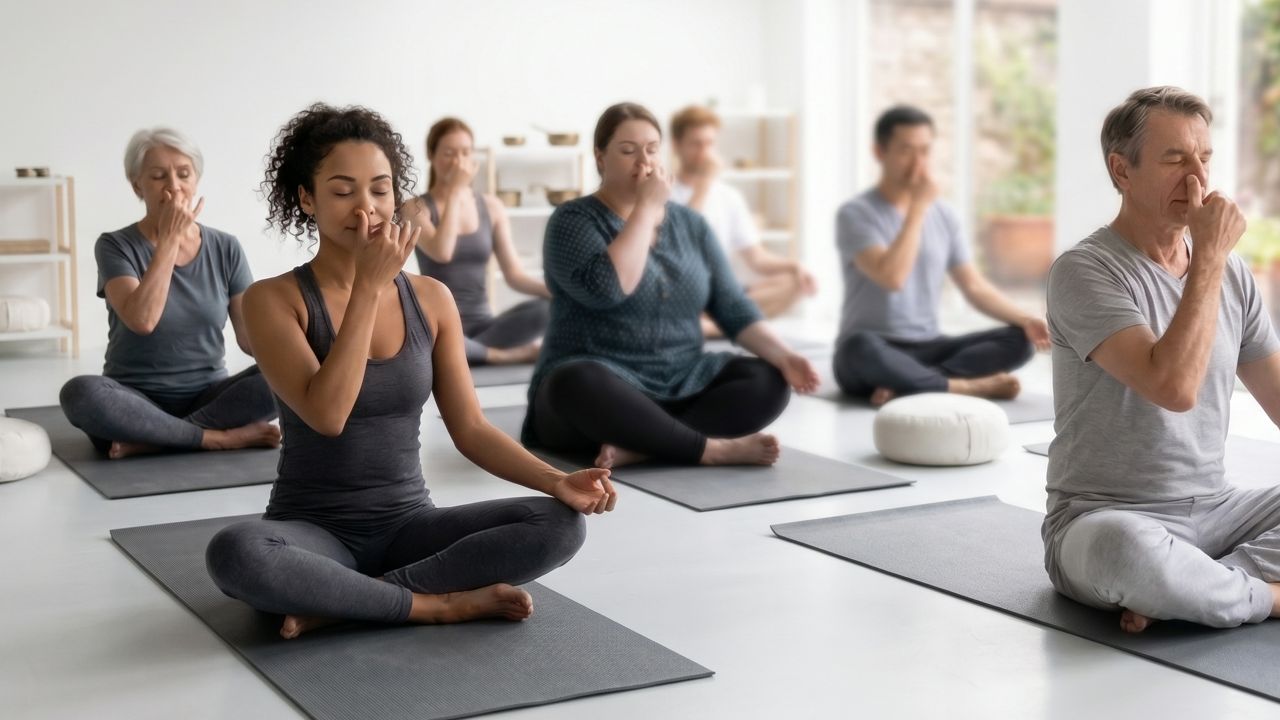
Pranayama is consistently one of the weakest components of the average 200-hour yoga teacher training. Most programmes give it limited, unevenly distributed contact time, with minimal attention paid to the skill that actually matters: teaching it. Graduates leave knowing how to practise nadi shodhana. Few know how to introduce it to a nervous beginner or progress a student who is ready for more.
The most important question for a school director evaluating pranayama curriculum is not "how many hours are we spending on this?" It is: "Are we developing trainees who can teach pranayama, or just trainees who can practise it?" The gap between those two outcomes is where most programmes fall short.
What the Standards Require
If your programme is registered with Yoga Alliance, pranayama and subtle body content sits within the Techniques, Training, and Practice category, which carries a minimum of 75 hours across the entire category (covering asana, meditation, and pranayama/subtle body together). There is no separate standalone pranayama hour requirement. In terms of content, the standard requires that pranayama training addresses historical context, effects on the anatomy and the subtle body, complete sequencing, and key techniques including ujjayi, nadi shodhana, and kapalabhati. It also requires coverage of the subtle body framework: koshas, kleshas, chakras, nadis, and prana vayus. If your programme has been citing a standalone pranayama hour count as a compliance requirement, that framing is not accurate to the current standard.
Yoga Australia addresses pranayama through two curriculum areas. Techniques and Practices (area 6) requires knowledge of human systems applied to technique, multi-sensory instruction, and risk identification. Yoga Foundations (area 3) is where the theoretical underpinnings of pranayama (its place in the tradition, its relationship to prana and the subtle body) properly belong. Both areas emphasise demonstrated competency rather than fixed hour counts.
Scope for a 200-Hour Programme
In classical yoga, pranayama is a major limb of practice deserving years of dedicated study. In a 200-hour teacher training, it is one component among many. The design question is not how deep you can go; it is what depth produces a competent, safe teacher for entry-level contexts.
A realistic scope covers these core techniques in sufficient depth for trainees to both practise and teach them: diaphragmatic breathing and breath awareness, ujjayi, nadi shodhana, kapalabhati (with attention to contraindications), and bhramari. Techniques such as bhastrika, basic kumbhaka, and surya or chandra bhedana deserve introduction with enough context that trainees know what they are and when a student should be referred to specialist training. Advanced retention sequences and pranayama prescribed for specific health conditions are outside scope at this level, and being explicit about this protects graduates professionally.
The subtle body content the standards require alongside pranayama (koshas, kleshas, chakras, nadis, prana vayus) should not be treated as a glossary to memorise. It is the conceptual framework that gives pranayama its coherence within the tradition. Trainees who understand why different techniques are said to affect different aspects of the subtle body are better placed to teach it honestly.
Structuring It Progressively
The most common sequencing mistake is teaching pranayama as a standalone block: several consecutive sessions in one week, then nothing. Trainees learn the techniques, complete whatever assessment is required, and file them away. The techniques do not become teaching competencies because they are never applied, adapted, or returned to.
Pranayama needs to be distributed across the training calendar. Early in the programme, the focus belongs on breath foundations: diaphragmatic breathing, breath awareness, and the physiological basics of how the breath works. Ujjayi fits here because trainees are already encountering it in asana, and this is the moment to explain both why it is used and how to cue it.
In the middle phase, the remaining core techniques are introduced one at a time. The pedagogically important step most programmes omit is the immediate transition from experiencing a technique as a student to analysing it as a teacher: What cues work? What do beginners struggle with? What contraindications does a yoga teacher need to communicate clearly?
The later phase is integration: trainees lead pranayama practices for peers and incorporate pranayama into full class sequences. Feedback here should focus on teaching mechanics. The question is not "did you practise this correctly?" It is "could a beginner follow your instruction safely?"
Developing the Teaching Competency
Practising a pranayama technique and being able to teach it are different skills, and the gap between them is where most programmes leave their trainees stranded.
Teaching pranayama requires verbal cueing under uncertainty. Breathwork is more intimate and anxiety-provoking for many students than asana. The cues that guide a competent practitioner through alternate nostril breathing are not the same cues that land with someone who feels like they are doing it wrong. Trainees need practice developing language for both situations.
It also requires recognising and responding to distress. Pranayama can trigger lightheadedness, anxiety, emotional release, and in rare cases hyperventilation. Graduates need to know how to guide a student to back off safely without alarming the rest of the class. A corporate wellness class also needs a different introduction to breathwork than a group of dedicated practitioners, and trainees who have only ever guided pranayama to fellow trainees have not practised this adaptation.
Sequencing decisions deserve explicit curriculum time: where pranayama sits in a class, how long it should run, and what happens when a student is not ready for the technique the class plan calls for. These questions rarely get answered explicitly in a training, leaving graduates to work them out through trial and error.
Assessment That Reflects Genuine Competency
Written assessment on pranayama tends to test memorisation: name the technique, list the benefits, state three contraindications. That is a necessary minimum, not a competency standard.
Observed teaching matters most. Each trainee should lead a practice covering at least two techniques for a small group, assessed on cueing quality, pacing, contraindication delivery, and response to a struggling student. Scenario-based assessment supplements this well: presenting a trainee with a realistic situation (a student in early pregnancy with elevated blood pressure) and asking which practices they would modify and how tests applied knowledge in a way that a written list cannot. Pranayama integration within the full class practicum is equally important: trainees should sequence pranayama naturally rather than bolt it on as an afterthought.
The Standard Worth Aiming For
A 200-hour graduate of a well-designed pranayama module should be able to lead core techniques safely and confidently, explain what pranayama is and why it belongs in yoga practice, communicate contraindications clearly, adapt instruction to different populations and contexts, and integrate pranayama coherently within a full class. They should also know where the boundaries of their training lie and be able to name those boundaries to their students.
That is an achievable standard, and higher than what most programmes currently produce. The gap is almost always a curriculum design problem rather than a content problem.